Friday, March 10, 2023

Hidimbaa - Our Tabebuia tree

In 2021, we brought home a small Tabebuia sapling and gave her a permanent home in front of our house. Since then she's been nurtured lovingly by me and other family members too. Bheema helps out by adding nitrogen at times and aerating the soil at other times.

Hidimbaa is growing well. I'd even say thriving! She's probably 15 feet tall already. She has surprised us with her resilience, withstood many a storm during last year's incessant heavy rains and some crazy heat! She has smartly avoided the electric wires and is growing around them. Not a single branch in between those high tension cables. That's not us. We've not broken a single leaf off of her. It's all her natural intelligence!

But how does she know?! Is she reacting to electro magnetic waves?

We're all eagerly waiting for her to sprout her first flower. Don't know if it'll be this summer or next!

And if you're wondering why we named her Hidimbaa... Well, we already had a naughty Bheema in the house! 😉

Monday, December 26, 2022

Savoury Bits: Just in Time & Just Enough Learning

If you've had a conversation with me anytime during the last 1.5 years, then I'm sure I have mentioned SmartStart to you. I may have also mentioned how much fun I'm having building multiple flavours of this product with my team at Adeptic Creative Labs and Clearly Blue Digital.


Aedge Episode Cover for Savoury Bits


The ReStart flavour of SmartStart helps women on career breaks return to the workplace. It supports them with soft-skills, helps them rebuild their confidence and realise they're not alone in this journey. We're documenting the success stories of our learners on our SmartStart LinkedIn page. It's extremely satisfying hearing directly from our learners and realising the impact our work has in their lives.


In this episode of the Aedge podcast, we go behind the scenes and speak with the creators of SmartStart. We delve into what went into the creation of SmartStart, what we knew going in, how the program evolved and how some things came as a surprise to us too.


Give it a listen and tell me what you think!

Saturday, June 18, 2022

Learning with Games

I remember the day I was kidnapped. I endured a terrible bike journey in a basket. Then I found myself in the place I call ‘home’ today.

Are you thinking of ‘Stockholm syndrome’?


Stop. Focus. Ha, I’m using her cues now!


No, I’m not a hostage. I am adopted.


I was separated from my mother, my siblings and the dingy room with the stinky, damp floor. Now I live it up with my doting family. I adore them. Can’t let them out of my sight for a moment!


She got me started on games no one had ever taught me before. I enjoy her games. They make me think, explore and try new things while having fun. Plus, I earn treats every time I get it right.


Most importantly, I have her undivided attention during our games. No mobile phone, TV, conversation or book to distract her. Well, the mobile still comes out at times and it’s typically directed at me. Then I get annoyed and try to break the flow by doing something unexpected to make her put it away. In between, I discreetly check on her with furtive glances. Disappointing—she’s usually giggling behind that mobile. Sigh! I’m yet to get this down pat.


Initially, I didn’t have to do much to earn treats. The games were simple.

  • Meet her gaze—get a treat.

  • Meet her gaze, hold for a few seconds—get the treat.

  • Look at her when she says my name—treat.

  • Take a step towards her when she says my name.


After a few days, the games changed. I earned treats for slightly more complicated actions.

  • Run to her when she calls my name.

  • Follow her when she says “Let’s go”.


As I grew up, the actions became easier. I would do them happily anyway. But I realized she loved these games. So I played along, to please her. Also, who says no to treats!


Our games are still evolving. I’ve mastered the older ones. Once I master something, I get bored if I’m asked to do it repeatedly. But she keeps changing it up, keeps me guessing and on my feet. I like it!


I don’t want to sit still. I can’t! What do I do with my energy?! She knows. She understands.


She ensures our games have variety. There’s some running around, climbing up and down stairs, stretching, sniffing things out, vigorous activities likes jumping or tug, not-vigorous-yet-exciting stuff like watching people, animals and things move past our gate, impulse control and rest periods built into each play session. I sleep well after this.


Typically, our games involve a lot of food. Meal times are fun! Unless she’s busy with work. Then she sits at her desk with her laptop and I can’t get her attention. I’ve given up now. It must be important. I let her work in peace and quietly eat by myself. No matter what’s on my plate then, it doesn’t taste good.


I am Bheema Nadig. I love playing games with Madhavi Nadig.


Bheema, chilling with his current favourite toy


Backstory
My colleague is coaching us to improve our communication. As part of an exercise on exploring our creativity and writing a blog, she gave me the prompt to write about Bheema's take on dog-training in 500 words.

This is my imagination of Bheema's take on his Positive Reinforcement (R+) training. Bheema's thoughts here are my interpretation based on observing his reactions and behaviours in real situations and events.

Monday, December 30, 2019

Bengaluru's oldest inscription stone


Went looking for namma Bengaluru's oldest inscription stone from 890 CE at the Pancha Linga Nageshwara Temple in Begur on the city outskirts, thanks to an article I recently read. This is the earliest documented evidence mentioning the existence of Bengaluru as early as the 9th century. Was great to see, touch and feel these herostones and feel connected to my city that has a timeline longer than 1100 years!

The temple is being renovated and one can see newly constructed gopuras and fresh carvings on new stone panels. However, many ancient stone panels with beautiful carvings are pathetically hidden at the back of the temple, away from most eyes.

These historic inscription stones are hidden behind some rusted junk and a garbage patch. Many devotees who come to pray at the temple are unaware of their existence. There are large boards mentioning the names of the new donors sponsoring the renovation, but none about the historical significance of this temple. So it's easy to miss the inscription stones. Feel sorry to see something so ancient lying in a state of neglect.

Interesting to how the same place can make you feel proud and disappointed at the same time!

Tuesday, October 01, 2019

Swalpa adjust maadkoLi

In 2019 all the talk is about Digital India and the ongoing onslaught of the fourth industrial revolution a.k.a Industry 4.0. What is that, you ask?
It's about having systems talking to each other
 through wireless connectivity, 
  in the land of cheap smart phones,
   where data is the cheapest in the world,
    accessible to all and sundry, 
     where decision making is automated,
      based on input from sensors, 
       leading to smart cities and smart operations 
        with increased efficiency and
         jobs are Bangalored to bots this time! 
          Let your imagination run wild and 
           add your own happy (and sad) thoughts here...
Newspapers are already killing it with articles about how this will lead to massive unemployment in the near future.

Ground reality however is grounded knee-deep, unable to take off on such wild imaginative excursions. Feel free to blame the BBMP for potholes in network connectivity as well, in the midst of a bustling neighborhood in South Bangalore. Realized this when I visited ICICI Bank along with my mother. We came with a simple request - please remove my deceased father's name from a joint account where my mother was the primary account holder.

The Govt. of India claimed 80% of Indian citizens had bank accounts in Mar 2017, with 157.1 crore accounts in different banks. That year, the death rate was 0.73%. Let's assume each deceased person held an account. Then 1,15,00,000 (i.e. 1.15 crore) bank accounts needed to be updated. One moment... let's digest that number. Given this large number it's but natural if you assume this is a common for banks, with standardized procedures for handling such cases in 2019.

Ummmm ... no! Apparently, a deceased account holder isn't something this branch is used to dealing with. None less than an assistant bank manager was worthy of the task! That's even more surprising since the branch is located in Jayanagar, Bengaluru, of late a pensioner's paradise, home of many rich (maybe?) and retired (definitely!) seniors and super-seniors.

Turns out even if you have a sole or survivor type of joint account, ICICI wants you to close the joint account held with the deceased person and open a new account for yourself. Sure, en tondre illa! Just didn't think it'd take 1.5 hours and involve filling out lengthy forms, signing 15 autographs and waiting eagerly & endlessly for the staff to process it, amidst their loud, desperate cries for help to assistants who scrambled around the bank pointlessly, disappeared indefinitely, reappearing surreptiously by the time their name was called out a sixth time. The icing on the cake ... the bank asked for a cheque from another bank for KYC (Know Your Customer), after my mother had maintained a twenty year long relationship with them.

In the age of self-driving cars, when ISRO is simultaneously reconciling with Chandrayaan-2's just-miss of an autonomous soft moon-landing while planning to send humans on a Gaganyaan, ICICI is struggling to transform its staff's 90's era paper-pushing style of working since it's unable to keep it's intranet alive and accessible. Someone, somewhere must have been meditating in a Himalayan cave all this while!

Saturday, September 28, 2019

Insights from a Podcast Convention

September 30th is International Podcast Day.  @hubhopperofficial organized a podcast convention in Koramangala, Bengaluru in honor of this.

Interacted with some Bangalore based podcasters and listened to several panel discussions.


Topics touched upon included
  • podcasting is a nascent industry in India today
  • radio stations repackage their shows as podcasts to increase the shelf life of their content
  • lack of effective monetization models
  • tools commonly used by creators
  • new capabilities introduced in new tools
  • creators' aspirations, influences and issues
  • engaging with audiences using other online formats
  • driving offline conversations via meetups‌ and interactive listening sessions
  • difficulty of reaching audience, since they are spread across too many platforms
  • audiences dominantly from urban areas
  • difficulty of engaging folks in T2 cities
  • podcasts in regional languages are a miniscule minority
  • back catalog contributes up to 40% of consumption share vs new episodes
  • fake streams and downloads from bots
  • differences in approaches of content creators in different mediums like blogs, podcasts, radio, videos, Twitter, Instagram/Snapchat and other social media.

The number of female content creators on stage and seated in the audience caught my attention. If today's crowd is truly representative of the podcast space, then India is ahead of the US in terms of representation of multiple voices and diversity in podcasts.

Tuesday, September 24, 2019

An Indonesian Angklung in a Carnatic classical performance


Had the good fortune of meeting Dr Anasuya Kulkarni, a doyenne of world music.

Having lived in multiple countries‌ in the South East and Africa, Dr Kulkarni has not only mastered the local instruments of those countries, but also adapted them for use in classical Carnatic concerts. She graciously organized and performed an impromptu private concert for me in her beautiful home in J.P. Nagar, Bengaluru. M'am, I'm so honoured to have met you today and will treasure this angklung performance you and your students treated me to.

Here are some video clips of tonight's impromptu angklung concert. The first is a Carnatic tillana. The second is a popular Indonesian song Halo-Halo Bandung.


The angklungs in these videos are unlike those traditionally used in Indonesia. Traditional Indonesian angklung performances feature multiple musicians and is led by a conductor, since each artist plays 1-2 notes only.

Dr Kulkarni is the first to adapt and introduce the anghlung to the Carnatic music scene. Hear her explain it in herself Kannada. Her idea was to make the instrument playable by just one person and make it easy for that artist to handle their instrument. Through her innovation, she set angklungs of different notes in a wooden frame, making it convenient for a single artist to perform a full piece using all the notes. Dr Anasuya's first public performance with the angklung was at the Durlabha Vadya Vinod International Music Festival in 1982.


In 2008, Limca Book of Records awarded Dr Anasuya for introducing the angklung to Carnatic music

The frame can hold 8 angklungs at most. For a raga that uses different notes, the artist picks the angklungs with those notes and changes the array on the wooden frame. But what if you need a note in a higher octave? Since each angklung produces notes in 2 octaves, the same anklung is used for both the ordinary and the higher note.


An angklung - produces the same note in 2 octaves
Enjoy these clips from her recent concert with a full Carnatic ensemble, supported by Vidwan Yashaswi on violin, Vidwan B.N. Ramesh on mridangam and A.V. Kashinath on kanjira, accompanied by her students Tapasya Singh (left) & Jahnavi Singh (right) : Vatapi Ganapatim Bhaje and Thyagaraja's Pancharatna Kriti Endaro Mahanubhavulu

Sunday, August 25, 2019

Tree Plantation Drive using Miyawaki method

Participated in a tree planting drive recently.

We planted a lot of saplings densely in a small area. This is the Miyawaki method where a variety of native species are grown in close proximity to one another. The plants promote the growth of one another, as a result the forest grows faster. More on the method here.


We were a team of close to 200 volunteers, who had heard about this project from various groups and NGOs. Everyone came together at the Indian Railway Institute of Disaster Management to lend a hand and work towards a better climate and a greener city.


The organizers had scientifically selected the saplings and placed them out on the plots at the exact location where they had to be planted. The volunteers worked the soil and transplanted each sapling at the marked locations. Next, the plots were watered and mulched with hay for the ground to retain the moisture.


It was a beautiful day and people showed up in large numbers. Was great to see the energy of all volunteers - young, old and everyone in between, families, students, working professionals and retirees alike.


Have seen lots of videos and pictures of people talking about the Miyawaki forests. Out here I got to see first hand one that had been planted in December. Gazing at those mini forests gave us ample motivation as we planted more samplings beside them.


Hope to visit again in a few months and see the results of our combined efforts.


ರಾಜ ಭವನಕ್ಕೆ ಸುಸ್ವಾಗತ / Welcome to Raj Bhavan


My cousin and I accepted the Governor's invite for an open house and toured the Karnataka Raj Bhavan in Bengaluru today.

As we enjoyed the band playing at the glass house, we were treated to some good tea and sweetu-khara (biscuits). We walked through the garden, marvelling at bonsai trees, enjoying the light spray from fountains, appreciating the manicured lawns, the sculptures of mythical beings watching over them and the variety of flowers and plants grown in the form of different animals. The whole place was lit up with multi coloured lights that enhanced the beauty of the gardens in the evening light.

As we approached the mansion, we watched the tricolor lowered ceremonially, while all the guards stood still firmly in attention.

Inside the colonial-style building, we entered the formal dining hall where its taxidermy animal heads stared down at us from their high perches on the wall, the many British era paintings below them tried to soften the ambience, the crystalware in the solid wooden cabinets reminded you of the real purpose of the room, while the ancient sculptures transported you to a different era altogether.

Next we visited the governor's office with its two rows of red cushioned chairs with the governor's blue cushioned chair presiding over them. This hall is dotted with beautiful artifacts from several centuries. The seats in the waiting area have enamel designs on wood and plush cushions covered in bright embroideries. The walls are lined with collections of photographs of all governors of Karnataka, presidents and prime ministers of India. One end offered a delightful view of the garden, while the other end lead to the ceremonial hall where leaders are sworn in.

The ceremonial hall is an awe inspiring place too. It's walls are decorated with glorious Tanjore paintings and enormous tapestries which would look even grander with some restoration. Rows of wooden chairs emblazoned with the national emblem were neatly lined up facing the stage which was now covered by a giant screen. A short video showcasing aerial views of the campus and a quick tour of the interiors and arrangements at the Raj Bhavan was followed by a recorded speech by Governor Vajubhai Vala.

We left the hall and walked past a series of rooms meant for official guests, each named after an Indian river. We exited the mansion, walked through a small portion of the garden, past a rudraksha tree planted by Prime Minister Modi, and found ourselves back at the flower clock by the main gate after 1.25 hours. Since we couldn't click photos during the tour, I satisfied my rebellious itch by sneak-clicking a picture then and there.


Too bad the Governor didn't meet us. Oh well!


Sunday, November 18, 2018

Coming home

Coming home is a strange feeling.

What’s home? Is it the home I grew up in and am now back to? Is it the home in Boston I spent over 6 years in, the majority of my past 11 years and my time in the US? Any of the 2 homes in Buffalo when I was a poor student living with roommates? The room in Framingham that I kinda snatched and made my own for the first month after my graduation? The room in Hopkinton I rented for 6 months, while trying to ease into a professional’s life, clearing my educational loan and setting up my future life in Boston? The Milford apartment of 1.5 years which was my first home that was wholly mine and mine alone? The Somerville apartment I shared with a friend for about a year, getting the first taste of city life in the US and Boston? Stockholm where I spent 2 months in 2017 and visited multiple times, so frequently that I started feeling a sense of belonging there too and upended my life in Boston?

I landed in Bangalore early last morning. Just my second day back. There are so many things that are familiar, making me happy that some things haven’t changed. There are things that have changed, causing surprises and sometimes a tinge of sadness. And then there are those things that remind me of similar things in Boston, from the life that I left behind. Haven't I come a full circle? Until now this was the life that I had left behind.

How do I pay the porter - do I have Rupees or Dollars in my wallet? Which is the driving seat and which is the passenger seat in the car? Automatic or manual? Which is the “right” side of the road to drive on - left or right? How do I turn on the light in my room - flip the switch up or down? Can I drink water from the tap or do I need filtered water? Do I add or subtract 1.5 to my current time to calculate the time in Boston? Is it day or night for my friends there? Is it hot or cold there?

And just like that I don’t need to worry about New England’s eccentric weather patterns now.

Sunday, May 13, 2018

Shiva slaying Andhaka - carvings at Elephanta Caves

A post shared by Madhavi Nadig (@m_nadig) on

What a difference there is from reading about the caves, the sculptures and the destruction in a high school history text to seeing it with one's own eyes!

The combination of history and mythology is so captivating. Why do the writers of history text books present only uninteresting, dull facts and dates to students?! The beauty of the caves is scarred by sabotaging colonists, still it shines through.

The sculpture reveals the full mythical story of the battle between Shiva and Andhaka. During the battle, each drop of Andhaka's blood that falls to the ground spawns another form of Andhaka. In this depiction Shiva pierces Andhaka's heart with his trident, collecting Andhaka's blood in a bowl while Kali drinks the blood, effectively preventing the emergence of more Andhakas. The asura's fault was that he unknowingly lusted after his own mother, Parvati. After being defeated, Andhaka realizes his mistake and submits to Shiva. Shiva forgives him and makes him the head of his ganas.


Monday, January 08, 2018

Masterclass with Benjamin Zander


Recently watched the delightful Benjamin Zander conduct a masterclass and coach talented teenage musicians at the Boston Public Library.

Benjamin Zander's teaching style was a performance in itself ... explaining to the budding musicians the historical context, motivations and emotions behind the piece ... conducting them repeatedly until he was satisfied, through several seemingly flawless performances ... involving all ages of audiences ... getting the kids to focus on involving audiences instead of their own playing, artistry or poise.

The kids were great at playing their chosen instrument to start with. The coaching transformed their performances, elevating them to a completely new level. Loved every bit of it!

After watching his TED Talk way back in 2013, I immediately picked up his book The Art of Possibility which left me inspired. I don't know much about Western Classical music, but have wanted to see him in action since then.

Was pleased to meet him in person after waiting 5 years. Since the only thing I collect is books autographed by their authors, I happily bought his book and he graciously signed it for me. A new addition to my small but growing collection. Made my day!

Saturday, August 12, 2017

Indian + International Fusion Music


I enjoy Indian fusion music and started compiling a playlist.

https://open.spotify.com/user/mnadig/playlist/3bYlgxeUd0r4ZF4senV5bi

Suggestions are welcome.

Sunday, July 12, 2015

Rebuilding Nepal

Hello reader,

I am heading to Nepal for 2 weeks in Oct to volunteer with a group that's working to rebuild communities destroyed by the earthquake in April.

Some of these guys were visiting Nepal and hiking the Himalayas when the earthquake happened. They decided to stay back and volunteer in some villages. My coworker knows them personally and has been assisting them with fund raising and organizing supplies from everywhere. I decided to join her team and help out.

The idea is to work with another local NGO in Nepal to clear rubble and build new buildings using locally available materials. So far, Conscious Impact has been working on the logistics and waiting for monsoon to end. Hence this effort will go full swing from September.

Rebuilding your life and home with your family after you've lost everything can't be easy. Am looking forward to helping families in this herculean mission.

I started raising funds for this effort today. Please support me with your donation at http://www.empowered.org/mnadig.

Thank you for contribution!

I will keep you posted about the changes you helped bring about once I return from this trip.

Yours truly.


Saturday, March 15, 2014

Immigration

Immigration has been on my mind a lot lately. I'm not an immigrant - am happy & satisfied being a foreigner in the US. Yet I need to jump through some mind-boggling hoops just to live here legally.

The topic of immigration is a source of constant tension and dialogue with my employer - neither of us understand what it means to the other. It affects my vacation trips back home to India a lot lately. I struggle to not roll my eyes at the people who think it's perfectly normal and ask me to give them my exact travel plans 6 months in advance. Frustrated? Blame the lawyers, the politicians, the government...

I listened to an audio book today - "A Century of Immigration" by Christopher Collier & James Lincoln Collier.

It's informative and talks about the motivations for the different immigrant groups of people who moved to America, whether they stayed or returned to their homelands, how and why they interacted with or influenced society and the impact it had on their personal lives.

The authors seem to believe that America is the only democratic country that has seen waves of immigrants who have tried to integrate and create a new multi-cultural, multi-ethnic society. They seem ignorant or have chosen to be blind about India - the world's largest democracy and cultural melting pot. People from all over the world have migrated to India for millennia and formed their own sub-societies while also becoming an integral part of a larger common society. Would be good if they had paused a moment to think about how the 'New World' was discovered in the first place.

It appears that the immigrants never fully assimilated the American culture, choosing to retain several of their own traditions. However, their descendants were more likely to be 'American' due to their schooling. From what I've seen and by my own experience, I believe that's true.

It was interesting to note that many of the current immigration laws seem to have stemmed from ideas & prejudices that go back as long as the 1920's. Every country wants to keep the 'outsiders' out, America behaves no differently.

Coworkers asked me the other day whether I plan to get an American citizenship. They seemed surprized at my 'No'. There are lots of great things about America, but there are also lots of not-so-great things, which make me yearn to go back to India.

I'm content being a law-abiding foreigner in the US and a citizen of India. Never mind the truism 'The US passport is the most coveted document in the world'.

Monday, January 20, 2014

Recycle your money and become a social investor

Crowd funding projects is quite common these days. But this Bangalore based NGO crowd-funds micro-finance projects. Simple idea : Recycle your money and become a social investor.

http://www.rangde.org/how-rang-de-works

Tuesday, January 14, 2014

"You are hardworking."

"You are hardworking."

How do you interpret this statement? Is it a compliment? A mild insult hinting at the fact that you're not fully qualified to do your job, but make up for the lack of skill with great effort? Or a meaningless observation akin to smalltalk?

If it is a compliment, then it's a consolation prize. If it is an insult, sarcasm is a great way of putting it across. If it is smalltalk, it is no good as feedback. Nonetheless, the speaker chooses to focus entirely on the effort, with complete disregard toward the result.

Today I heard "hardworking" being called a skill. I'm stumped!

Saturday, August 13, 2011

Symbols


Namaste. à²¨à²®à²¸್ಕಾರ. à¤¨à¤®à¤¸्ते. 

This little ritualistic gesture is a common Indian greeting. Irrespective of the language you speak, it is a respectful gesture symbolizing the thought “I bow to the lord within you”.


Madam Toastmaster, fellow toastmasters and guests,


Today I’d like to share with you some thoughts about the power and meaning of symbols in our lives.

I recently read an interview of a well-traveled, highly educated man of science who filled his house with symbols from various cultures and followed some highly traditional rituals. He explained “Rituals give good anchoring. Never underestimate the power of symbols in your life.”

I think that's true. A symbol is a very concise representation of a set of ideas. A ritual is a sequence of actions which are performed for their symbolic value. These actions are in no way arbitrary.

Our lives are shaped by symbols and simple rituals - be it personal, traditional or religious.

Let's examine some common symbols.

They say a picture is worth a thousand words. What does this symbol convey to you?

The Toastmasters emblem.

To me, this represents having fun with you guys here at EMC on Thursday afternoons.


This bumper sticker has left an impression on me.


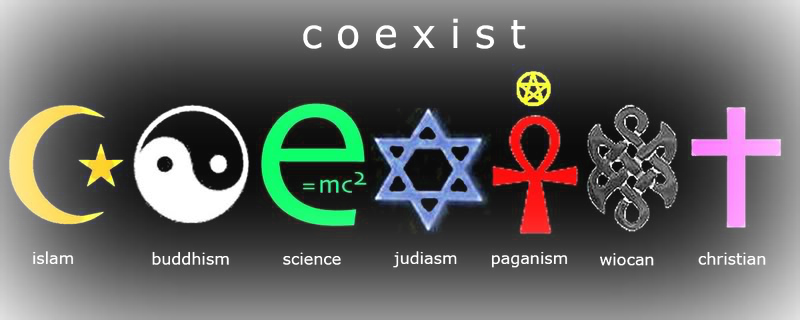
Notice how it is made up of many religious symbols, each of which have their own unique meanings. Put together in this creative manner, they form the word "COEXIST". I interpret this to be symbolic of "Each religion paves a different path to the same end". Or, as a simple directive to "Live and let live".

Here is an Indian symbol of good luck : the Swastika.


You’ll see this painted on the walls of most shops and enterprises in India. People use this symbol to brand various items to increase their good luck. It is a positive symbol.

A slight variation of this symbol has the exact opposite effect.

The Nazi Swastika evokes strong negative emotions in all of us.

How about this?

The picture screams “pirate”! :)

On a cheery note, let's look at Amazon's smiley logo.

Through its simple logo, Amazon conveys its motto : Do business with Amazon and we'll make you smile with satisfaction.

Symbols need not be only 2-dimensional. 3D symbols are used in most classical forms of dance and in sign language. Other areas where symbols are widely used include traffic signs, alphabets in the script of any language and mathematics.

Symbols are an essential part of technology as well. We use them everyday in our PCs and smart phones as icons.


I don’t think I could live without my iPhone and the 20-odd apps that I use daily. I LIKE this !!


All Facebook users know how frequently this symbol is used. 'LIKE' is used to communicate a whole spectrum of emotions such as "I love it!", "I agree" and "You have my support". I have even noticed people "LIKE'-ing obituary messages.

Rituals use symbols to reinforce ideas. Rituals may be performed on specific occasions or at the discretion of individuals. You may have an exclusive ritualistic way of greeting certain people – a handshake, a hug, a kiss, a verbal greeting or even calling out an insult as a way of greeting someone you’re very close to.

Here are some symbols that I grew up with.


The Rangoli is a traditional art form in India and is part of a daily morning ritual in most South Indian households. People wash their doorsteps and paint these patterns in front of their door as a way to ward off evil spirits and bring good luck.


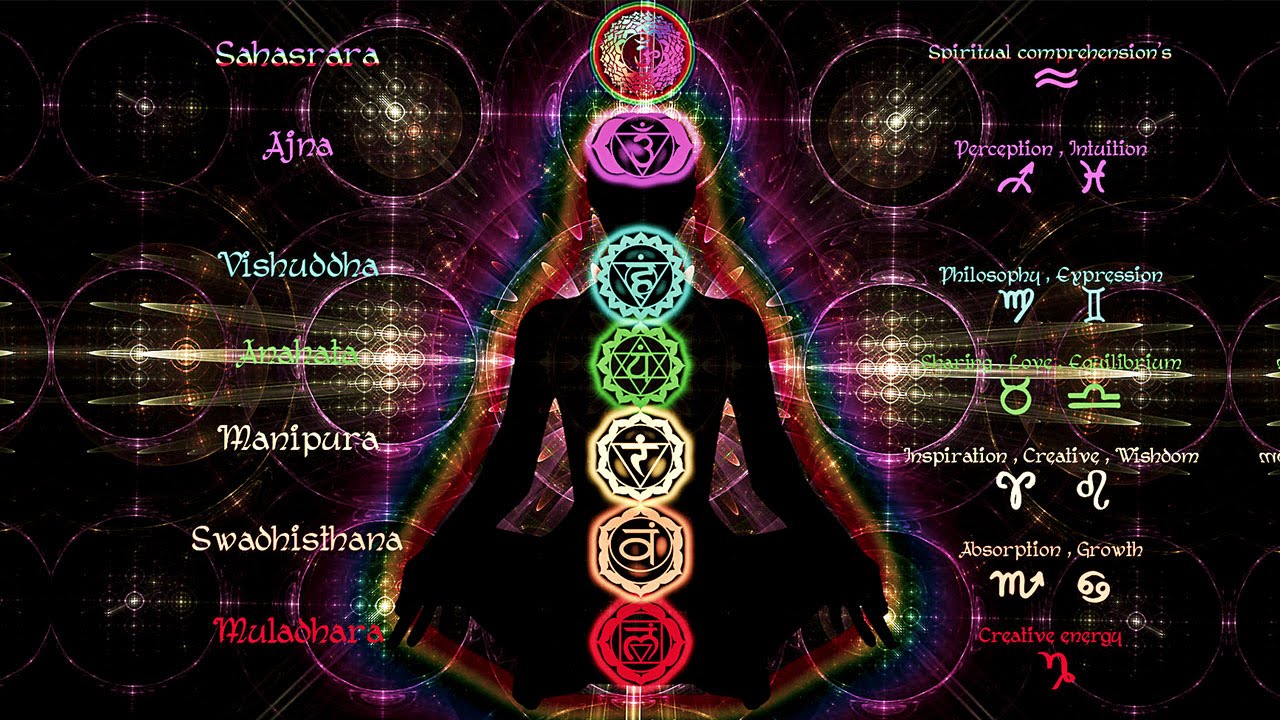
According to Kundalini yoga, the seven yoga chakras represent the different states of consciousness / energy-levels. Each energy center is activated by performing certain routines (rituals). The goal is to gradually raise your awareness from the lowest chakra to the highest chakra leading to spiritual enlightenment. 

Please take a moment to reflect on the simple rituals that you follow in your life. Every culture has its own set of unique symbols and some of us have developed our own personal ones. I’d love to hear about the symbols and rituals that hold meaning to you. Please share your thoughts with me.

Friday, June 17, 2011

I have an idea

What's the most resilient parasite? An idea! A single idea from the human mind can build cities. An idea can transform the world and rewrite all the rules... which is why I have to steal it!
- Leonardo di Caprio's lines from the movie Inception.


I feel an infectious, unbridled enthusiasm when my mind gets around any new idea. Therefore I'm constantly looking out for new experiences. This was my primary motivation to join our Toastmasters club as well. However, I was desperate for ideas for my ice breaker speech and looked to the Toastmasters Competent Communicator guide for suggestions. I found a bunch of topics, but was unwilling to speak about them since I found them mundane and uninteresting, personally.

One line caught my attention though ... "Speech ideas can appear suddenly and disappear just as quickly. Keep a pen and paper or handheld computer handy to note it immediately". I had none of these implements at hand. However this set me thinking tangentially about ideas themselves, and I couldn't help making the connection with the movie and the many long, memorable, intense, thought-provoking conversations that had ensued. There! I had the topic of my speech. I decided to present some ideas that I found very interesting.

I've discovered that TED talks are very interesting sources for ideas. Invited speakers share their ideas about diverse topics under one roof. As a nonprofit organization, TED is devoted to "Ideas Worth Sharing". I think that's an ambitious tagline and TED is doing an impressive job of living up to it! Apart from the official TED conferences, TEDx conferences are organized by independent bodies, in the same spirit.

Someone recently shared a TEDX video of Dr. Devdutt Pattanaik on Facebook and I was inspired by his passion. Though he's a physician by education, Dr. Pattanaik has been a management consultant and is passionate about Indian Mythology. Subsequently, I picked up one of his books on Indian Mythology from the town library and devoured its contents in an marathon reading session, without a precedent in recent times. I was spellbound by the depth of his knowledge and immensely entertained by his narrative.

By the power of his ideas, Dr. Pattanaik has turned his passion into his profession. He brings the wisdom of Indian mythology into Indian business, especially in human resource management. I was thrilled to learn of his title at the Futures Group, one of India's largest retailers. The story goes that the founder of the Futures Group, Kishore Biyani, approached him once after one of his talks and offered him any designation he wanted within the company. And, Dr. Pattanaik chose Chief Belief Officer.

How does one generate good ideas? I read that the Japanese inventor Dr. Yoshiro Nakamatsu has an interesting technique. He dives in his private pool and holds his breath underwater until he experiences a flash of creativity and comes up with a new idea. He then makes a quick note of it on a waterproof plexiglass pad, which he invented for himself for just this purpose. This octagenarian credits this ritualistic, oft-repeated, near-death experience as the source of ideas for his inventions.

While still researching ideas for my speech, I spoke to my mother and bounced some of these ideas off of her. She connected this breath-control technique to the well known yoga technique called Kapalabhati Pranayama. The word kapalabhati is made up of two words : kapala refers to the skull (including brain) and bhati means shining or illuminating. Due to this process, the organs under the skull, mainly the brain, are influenced in a positive manner.

Talk of positive outcomes made way for stories of my grandmother. I believe my grandmother was convinced of the power of prayer through some remarkable events in her own life. In any difficult situation, she prayed frequently and fervently for good ideas to be implanted in her mind and in the minds of her loved ones, to guide them out of their troubles. Being a little tongue-in-cheek, I'd say my grandmother resorted to prayer for 'Inception'! ;)

Come Toastmasters time, I felt rewarded for all my efforts in research and practice. Score! :)